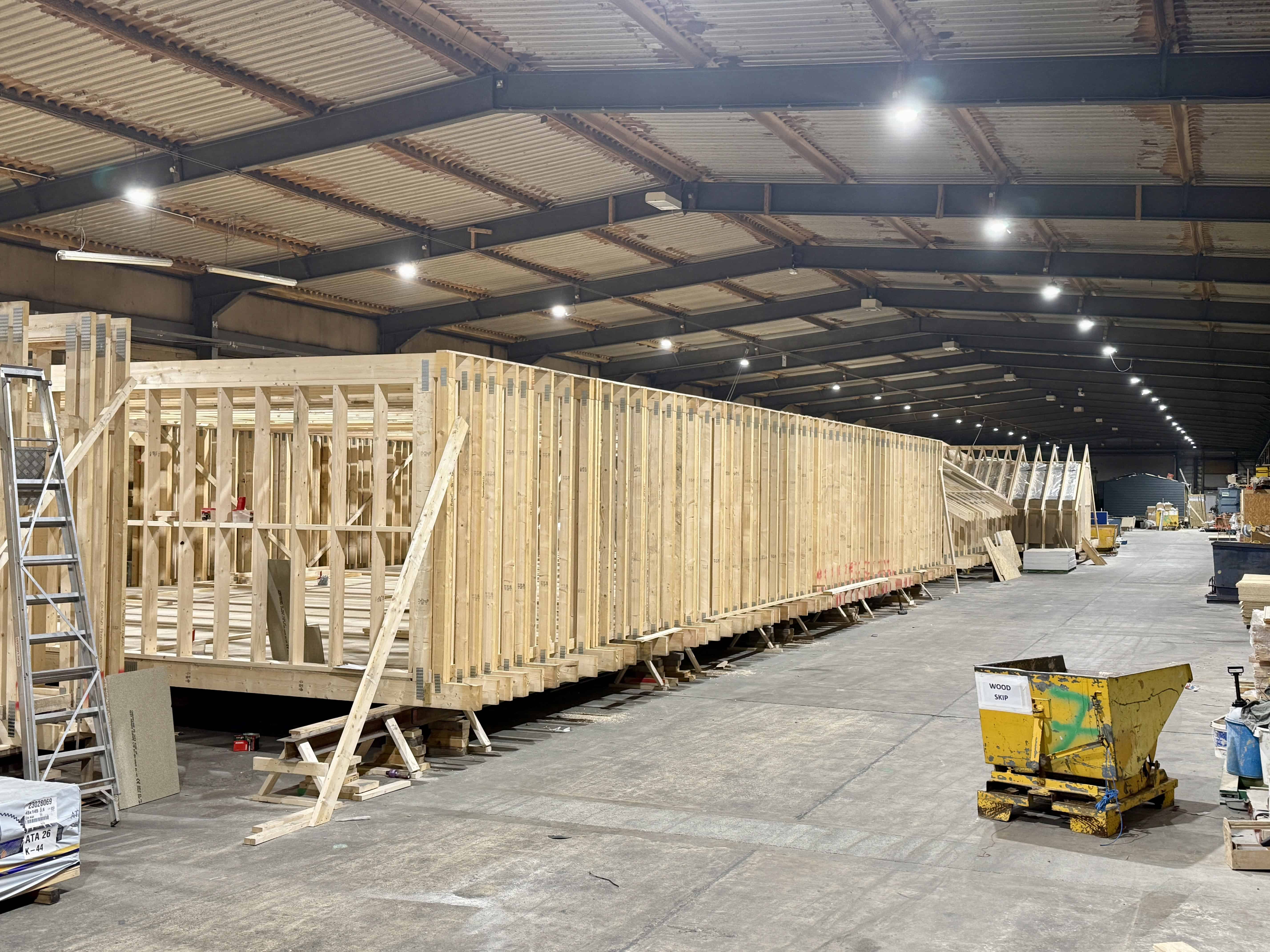
Off-site construction means designing, manufacturing, and assembling a project’s components in a controlled factory, rather than on-site at the property itself.
In this article, we explain what off-site construction is, the benefits of this method of home renovation, and some factors to consider before starting a prefabricated building project. If you’re specifically comparing this to a standard loft conversion, see our full Modular vs Traditional Loft Conversions comparison.
What Is Off-Site Construction?
After measuring the existing property and finalising the design with the owner or developer, materials are ordered and building work begins on the modular house extension.
Starting with the timber frame, each element of the structure is assembled to the agreed blueprint and in compliance with the relevant regulations. Once the prefabricated extension is complete, the components are loaded onto trucks and transported to site for final installation.
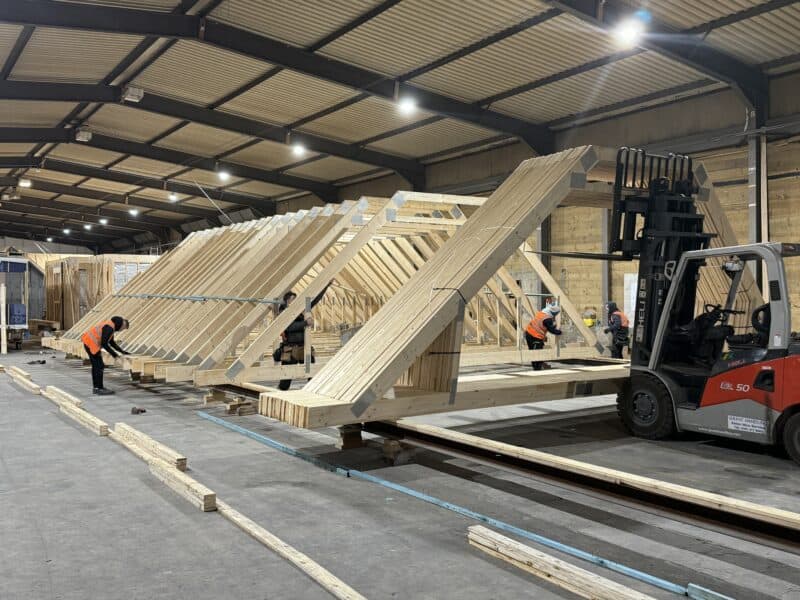
Workers assemble prefabricated wooden trusses in to modules for a loft conversion extension in our factory.
Benefits of Off-Site Construction
From minimising the time labourers spend on-site to reducing material wastage and improving sustainability, off-site construction offers real advantages to homeowners wanting more living space without the hassle. The benefits include:
Speed and efficiency
The Modular Building Institute found off-site construction is 30-50% faster than traditional building. Moving the work to a factory means site preparation and construction happen at the same time, not one after the other. Traditional building can’t start until planning permission and Party Wall Agreements are granted, which can stall a project by over 3 months if any disputes arise. Even then, unexpected issues during the build can cause further delays and push up costs.
One of the main advantages of off-site construction is that work can start on site while the factory build is progressing, removing a huge amount of time from the project. The property owner can also carry out their own investigations into their property during construction, catching and fixing any issues ahead of final installation.
See this in practice in our case studies.
Minimal on-site disruption
The structure, insulation, and most of the pipework are already complete before final installation, which significantly cuts the time tradespeople need to spend on-site. With skilled crane operators, the prefabricated components are lowered into position within a single day, after which plumbers, electricians and carpenters finish the plumbing, wiring and entryways, such as staircases in loft extensions. This streamlined process means most homeowners can stay in their property throughout, rather than moving out the way they might for a lengthier traditional renovation.
Safer building process
Working in a factory removes many of the real risks of a traditional site, falls from height, contact with power lines, being struck by tools or machinery. Controlled factory conditions also remove weather-related hazards entirely, high winds, wet weather, or storms.
Quality and durability
A factory environment allows far more rigorous quality control than a remote building site ever could. Materials, craftsmanship, and finishes are monitored throughout, and every element undergoes a final inspection before it’s sent for installation.

A Moduloft Attic or loft bedroom with skylights, beautifully decorated, floored and furnished by our client.
Sustainability
Unforeseen issues on a traditional site often mean ordering additional materials to fix them, and traditional timber-frame builds are notorious for the waste they generate. Because the blueprint is set at the start of an off-site project, builders can order the precise amount of material needed, cutting waste and improving sustainability.
Consistent pricing
Issues on a conventional site push up costs as extra materials and time get added. Off-site construction’s precision means companies can quote a genuinely fixed price from the outset, giving homeowners and developers a far more accurate figure to plan around.
Potential Drawbacks of Off-Site Construction
Off-site construction has real advantages, but a few elements are worth considering honestly before you commit to a prefabricated build:
Transport constraints
Prefabricated components need established delivery routes and proper access to reach the property. Homes only accessible by narrow country lanes may not suit off-site construction as a result.
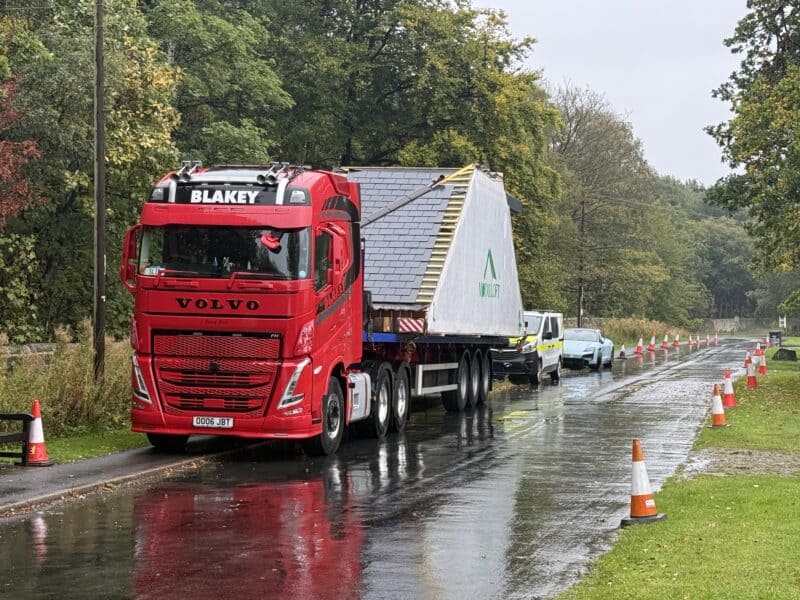
A finished module leaving the factory on its way to site.
Design constraints
Prefabricated buildings usually follow the same regulations as traditional extensions, but some planning departments apply extra scrutiny to off-site materials and aesthetics, often to keep a new build in line with the surrounding area, which can frustrate homeowners hoping to modernise their property.
Access to building work
Moving the bulk of construction off-site is one of the most attractive parts of this method for most homeowners, but not being able to watch progress in person can feel unsettling for some. At Moduloft, we build factory visits into our production schedule specifically so you can see your project taking shape and be reassured it’s being built to your standards.
Moduloft Are Off-Site Construction Specialists
For over a decade, Moduloft has refined its approach to off-site construction, working to source materials from sustainable suppliers so every extension is efficient and ethical. See our full Ultimate Guide to Loft Conversions for more on how the process works end to end, or browse our case studies to see real homes we’ve built this way.
For more information about our process, or what the advantages of off-site construction could bring to your next home renovation, please get in touch with us today or complete our quote form to get an obligation-free estimate.