A staircase is often an afterthought. But it’s actually a key factor in deciding what type of loft conversion suits your home, worth reading our Ultimate Guide to Loft Conversions if you’re still weighing up which type is right for you. When planning your access point, the stairs need to comply with staircase regulations while making the most of your landing space. Here’s everything to consider when planning your loft conversion stairs.
What Are Stairs to a Loft Conversion?
Stairs to a loft conversion are permanent, built-in staircases that give safe, legally-mandated access to your new floor. They must meet specific building regulations, but the design itself is flexible and down to your own taste. Positioned well, loft conversion stairs can add a real sense of light and space, as well as an extra floor to your home.
Why Stairs for Loft Conversions Are Important
Space-saving stairs give you a safe, compact way into your new floor. They need to meet building safety regulations, a minimum head height of 1.9m to 2m, and fire safety rules too. Good stairs also help protect your property value, since access is one of the first things a surveyor checks. It’s worth getting your staircase right from the very start of your design, not as an afterthought once everything else is decided. Have a read of our blog on avoiding mistakes when planning your loft conversion.
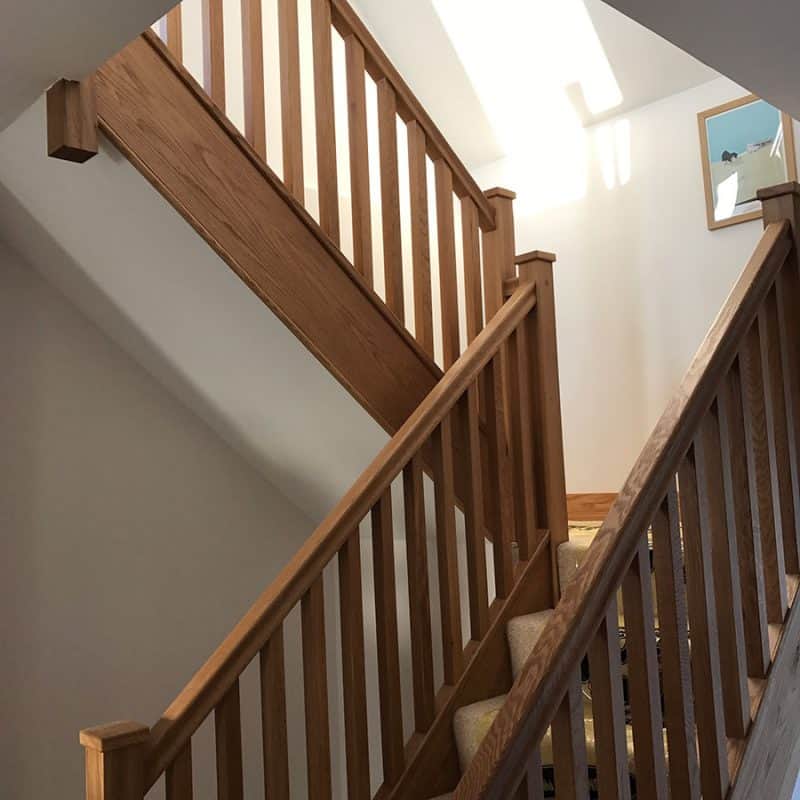
Benefits of Stairs in a Loft Conversion
On top of permanent access to your new space, a well-designed staircase offers real benefits:
- More functional than a loft ladder, no pulling up and down every time you need access
- A genuine architectural feature for your landing, not just a functional necessity
- The right design can make your landing feel more open, not less
- Fully customisable, in a material and style that matches your home
Staircase Regulations
Every permanent loft conversion staircase must meet these building regulations:
- A minimum of 2m headroom throughout, dropping to 1.8m at the lowest point under a sloping roof, provided there’s 1.9m in the centre
- No strict minimum width, but 600mm to 800mm is generally accepted
- Maximum pitch of 42 degrees
- Rise between 150mm and 220mm, going between 220mm and 300mm
- A handrail between 900mm and 1000mm above the pitch line
- A landing at the top and bottom, at least as wide as the narrowest part of the staircase
- At least 30 minutes of fire resistance
- Alternating tread staircases should generally only serve a single room, not a full new floor
- A minimum of 400mm clearance from any door to the bottom of the stairs
These regulations exist for one reason: keeping everyone who uses the stairs safe.
Not sure your landing has the headroom?
You don’t have to work any of this out yourself. We check every one of these regulations as part of your design, and we build the staircase in our own factory. Tell us a little about your house and we’ll send you a guide price for the whole conversion, staircase included.
How to Calculate the Space You Need
Getting a staircase right takes careful planning, and it’s something we handle for you as part of your design:
- We measure the vertical floor-to-floor height, giving us your total rise, number of steps, and overall staircase length
- We check your headroom clearance against the 2m minimum (or 1.8m under a sloping roof), and if there’s a shortfall, we’ll talk you through the options, a space-saving staircase, trimming ceiling and floor joists, adding a dormer, or repositioning the stairs entirely
- We help you choose the right staircase type for your space, a straight flight needs the most room, so winder stairs and space-saving designs are often the better fit for a tighter landing
- We plan your landing space properly, at least 800mm recommended top and bottom, with 400mm clearance wherever a door swings onto it
- We check for structural constraints before anything’s finalised, existing joists, walls or beams, so there are no surprises once work begins. Where possible, we’ll position your new stairs directly above your existing ones
How we build your staircase
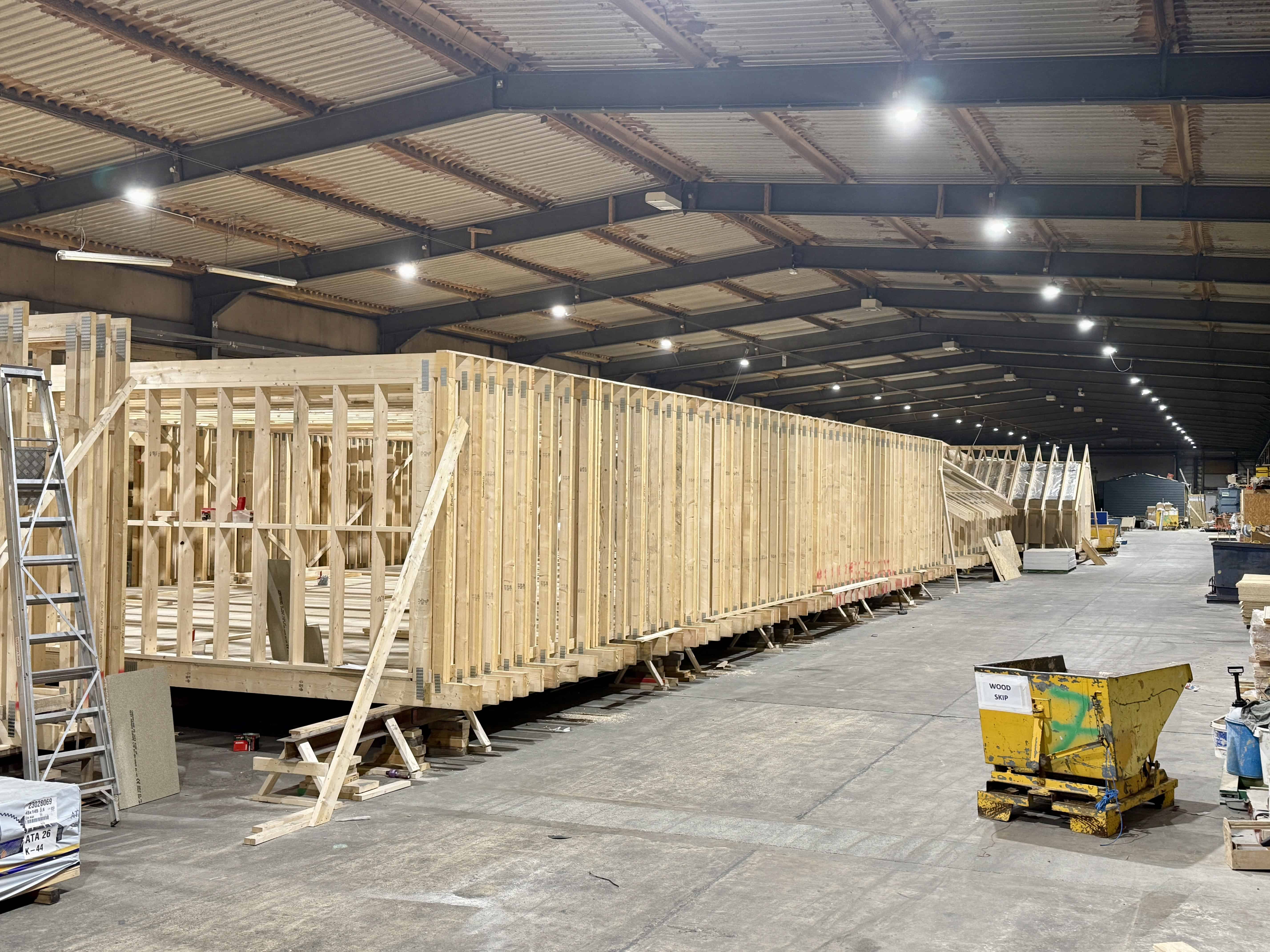
Every Moduloft staircase is built in our own factory, not bought in from a supplier. We offer a full range, from a cost-effective MDF finish through to softwood, up to a genuine hardwood such as oak, so your staircase matches the character of your home rather than a one-size-fits-all fitting. For homes needing a turn in the stair, we build both single and double kite winder staircases, keeping every tread compliant with Part K while making the most of a tight landing.
You don’t have to take our word for it either. You’re welcome to come and see the factory and watch your own loft being built before it ever arrives at your house.
Where We Put Your Stairs
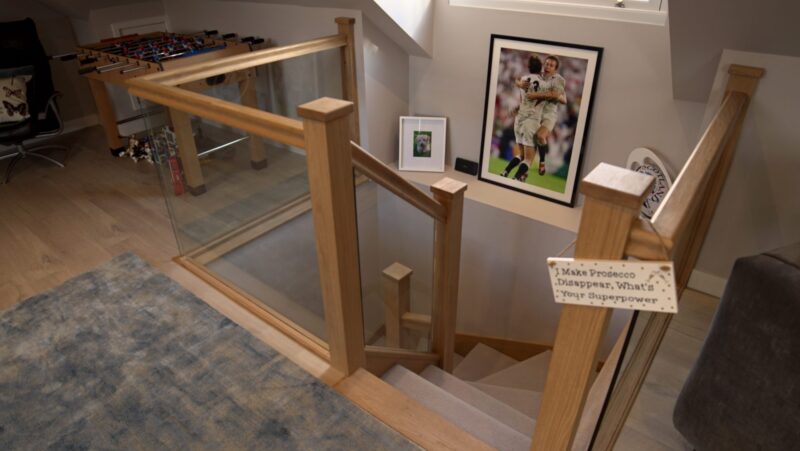
Positioning your new stairs directly above your existing ones creates a natural, continuous look, and it’s more likely to meet building regulations too. If stacking isn’t possible on your property, we’ll talk you through the alternatives, which sometimes means a small adjustment to an adjoining bedroom to create the space needed.
Loft Conversion Stairs Ideas
Once your staircase type is confirmed, here are some of the most popular design directions:
- Spiral staircases - ideal for small landing spaces, and a genuine architectural feature in their own right
- Alternating tread/paddle staircases - a highly compact option for the tightest spaces, with staggered steps
- Floating staircases - open rises and hidden supports, for a minimalist, airy feel
- L-shaped/winder stairs - sit neatly against a wall, make good use of a corner, and can give a landing real presence
Ready to Plan Your Staircase?
We handle every part of your staircase design, structural drawings, headroom calculations, and Building Regulations sign-off, as part of your full Moduloft build. See how it fits into the bigger picture in our Modular vs Traditional Loft Conversions comparison, or if you’re exploring a specific type of conversion, our Bungalow Loft Conversions and Detached Loft Conversions pages cover how staircases work on those property types specifically. We build the same way whether you’re in London or across the Channel Islands, every staircase built in our North Yorkshire factory and installed as part of your complete new floor.
Find out what your loft conversion would cost
Answer a few questions about your home and we’ll come back to you with a guide price, including the staircase. No obligation, and no site visit needed to get the number.
Would rather talk it through first? Contact us and we’ll call you back, or come and see the factory.